
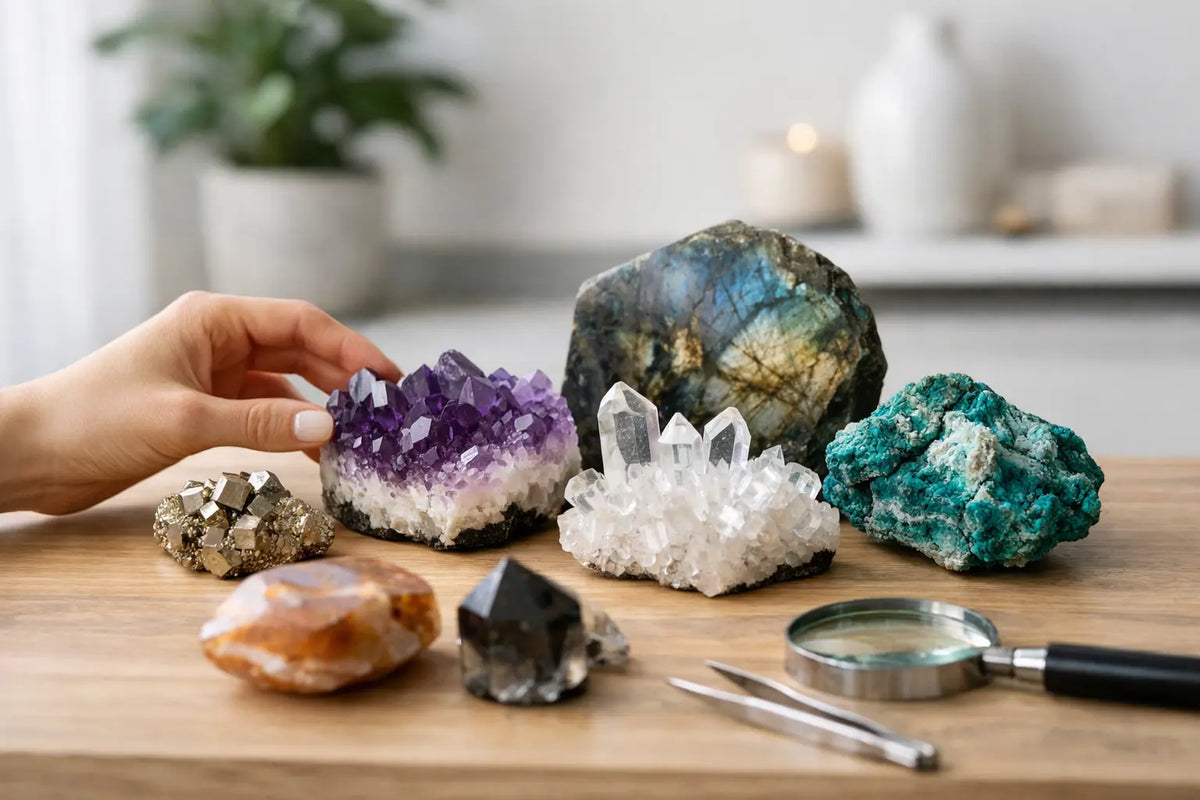
How to Choose Mineral Specimens for Your Space
A mineral specimen can change the feeling of a room before you ever learn its name. The glitter of a druzy surface, the quiet geometry of a crystal cluster, or the grounding weight of a polished sphere can turn a shelf, desk, or meditation corner into a more intentional space. Learning how to choose mineral specimens is less about finding the single “best” piece and more about recognizing quality, natural character, and the connection you feel when you see it.
Whether you are choosing your first mineral or building a collection over time, let curiosity lead while a few practical details guide your decision. A thoughtfully chosen specimen can be a beautiful part of your home, a meaningful addition to a personal ritual, or a gift that feels far more personal than something mass-produced.
Start With the Purpose Behind Your Mineral Specimen
Before comparing colors, price points, or crystal shapes, consider where the piece will live and what you would like it to bring to your routine. A large statement cluster may be perfect for an entryway or living room, while a small palm stone can be more fitting for a bedside table, work desk, or travel altar.
Some people choose minerals for their natural beauty and geological story. Others are drawn to the traditional symbolism associated with certain stones, such as clear quartz for clarity, amethyst for calm, or black tourmaline for grounding. Both approaches are welcome. You do not need to assign a spiritual purpose to appreciate a mineral, and you do not need expert geology knowledge to choose a piece that supports a mindful moment in your day.
Think about how you want to interact with it. A tower creates a clean, elevated look on a shelf. A sphere feels smooth and soothing to hold. A raw specimen highlights texture and formation, inviting closer observation. A cluster catches light and naturally becomes a focal point in a room.
How to Choose Mineral Specimens by Formation and Type
Minerals are shaped by extraordinary natural processes, and their forms are part of what makes each piece special. Even specimens from the same material can look completely different in color, pattern, size, and crystal structure.
Raw specimens are minimally altered and often celebrate the stone in its most natural-looking state. You may see uneven edges, matrix rock, tiny inclusions, or variations in color. These details are not automatically flaws. They can be evidence of a mineral’s formation and give the specimen its individual character.
Polished pieces, including freeforms, hearts, spheres, and towers, reveal color and pattern with a smooth finish. They can be easier to style in a modern home and more comfortable to hold during reflection or meditation. The trade-off is that polishing can soften some of the raw geological texture that makes a natural specimen distinctive.
Crystal clusters and geodes are ideal when you love sparkle, dimension, and visual drama. Look closely at the crystal points and how they sit within the base material. A cluster with irregular points can still be beautiful and authentic. In nature, symmetry is a wonderful surprise, not a requirement.
For a beginner, it helps to choose forms you genuinely enjoy seeing. A specimen you love is more likely to become part of your everyday environment rather than something left in a drawer.
Look Beyond Color Alone
Color is often the first thing that draws us in, but it should not be the only factor in your decision. Natural minerals can range from soft and subtle to richly saturated, and variation is common. Two pieces labeled as the same material may look noticeably different because of their origin, mineral composition, or the way light reaches the surface.
When assessing color, look for depth rather than perfection. A soft banding pattern, flashes of mineral inclusions, or a shift in tone across the surface can make a piece feel more alive. A very uniform, unusually bright color is not always a concern, but it is worth asking whether the specimen has been dyed, heated, coated, or otherwise treated.
Treatments are not inherently negative when they are disclosed. They can create striking decorative pieces at accessible prices. The key is transparency. If your priority is a natural mineral specimen, seek clear descriptions that distinguish natural color and formation from enhanced finishes.
Check Condition With a Balanced Eye
A quality specimen should be stable, thoughtfully prepared, and accurately represented, but “perfect” is not the goal. Small chips, internal fractures, uneven surfaces, and mineral inclusions may occur naturally or develop during extraction and preparation. These characteristics can be part of a specimen’s story.
Still, there is a difference between natural character and damage that affects appearance or durability. For towers and points, check that the base is level enough to stand securely. For clusters, look for loose points or fragile areas that could shed with regular handling. For spheres and carvings, inspect the finish for noticeable cracks, rough patches, or repairs if those details matter to you.
Ask yourself a simple question: does this piece feel intentionally selected and honestly presented? A trustworthy seller will describe significant chips, repairs, coatings, or alterations rather than hiding them behind flattering photography.
Consider Size, Weight, and Your Display Surface
Online photos can make mineral specimens difficult to judge. A palm-sized cluster can appear dramatic in a close-up image, while a large piece may look modest beside no familiar object. Always review dimensions and weight before deciding where a specimen belongs.
Measure the surface where you plan to display it. A tall tower needs enough overhead room, while a wide cluster needs a stable base and space around it so its shape can be appreciated. Heavy specimens deserve sturdy furniture, especially in homes with children, pets, or busy shared spaces.
Smaller minerals can be just as meaningful as large statement pieces. A petite sphere beside a journal or a small raw stone near a favorite candle can create a thoughtful ritual moment without overwhelming the room. Choose scale based on your space, budget, and lifestyle rather than assuming bigger always means better.
Ask About Provenance and Sourcing
The origin of a mineral can deepen your appreciation for it. Different regions are known for particular formations, colors, and qualities, and provenance can help explain why one specimen looks different from another. If locality matters to you, look for sellers who share what they know about where a piece was sourced.
Ethical sourcing is also a valuable consideration. The mineral trade involves many small-scale miners, cutters, and craftspeople around the world. Full supply-chain visibility is not always possible, especially for one-of-a-kind specimens, but a retailer’s willingness to prioritize responsible relationships, honest product information, and thoughtful sourcing is meaningful.
Be cautious of claims that sound too absolute. Natural minerals are not magic solutions, and they should never replace medical care, mental health support, or practical action. Their value can be personal, aesthetic, and ritual-based: a tangible reminder to pause, set an intention, or create a calmer home environment.
Choose a Piece You Will Actually Live With
The most satisfying collections are not built by chasing trends. They grow through pieces that fit your home, your values, and the season of life you are in. You may be drawn to warm, earthy minerals that complement wood and linen, or to luminous quartz and amethyst that brighten a quiet corner. Let your existing décor guide you if you want a cohesive look, but leave room for a specimen that simply brings you joy.
If you are giving a mineral as a gift, consider the recipient’s style first. A neutral-toned agate slice may suit someone who loves modern interiors, while a colorful cluster may delight a friend who enjoys expressive spaces. A small, carefully chosen specimen can feel especially thoughtful when paired with a note about why it reminded you of them.
You do not have to know every mineral name, formation, or traditional meaning to begin. Start with one piece that feels beautiful, well cared for, and aligned with the atmosphere you want to create. Over time, your collection can become a reflection of your own evolving rituals, travels, memories, and intention to Elevate Your Life with HarleyRae®.


Leave a comment
This site is protected by hCaptcha and the hCaptcha Privacy Policy and Terms of Service apply.