
How to Read Supplement Labels With Confidence
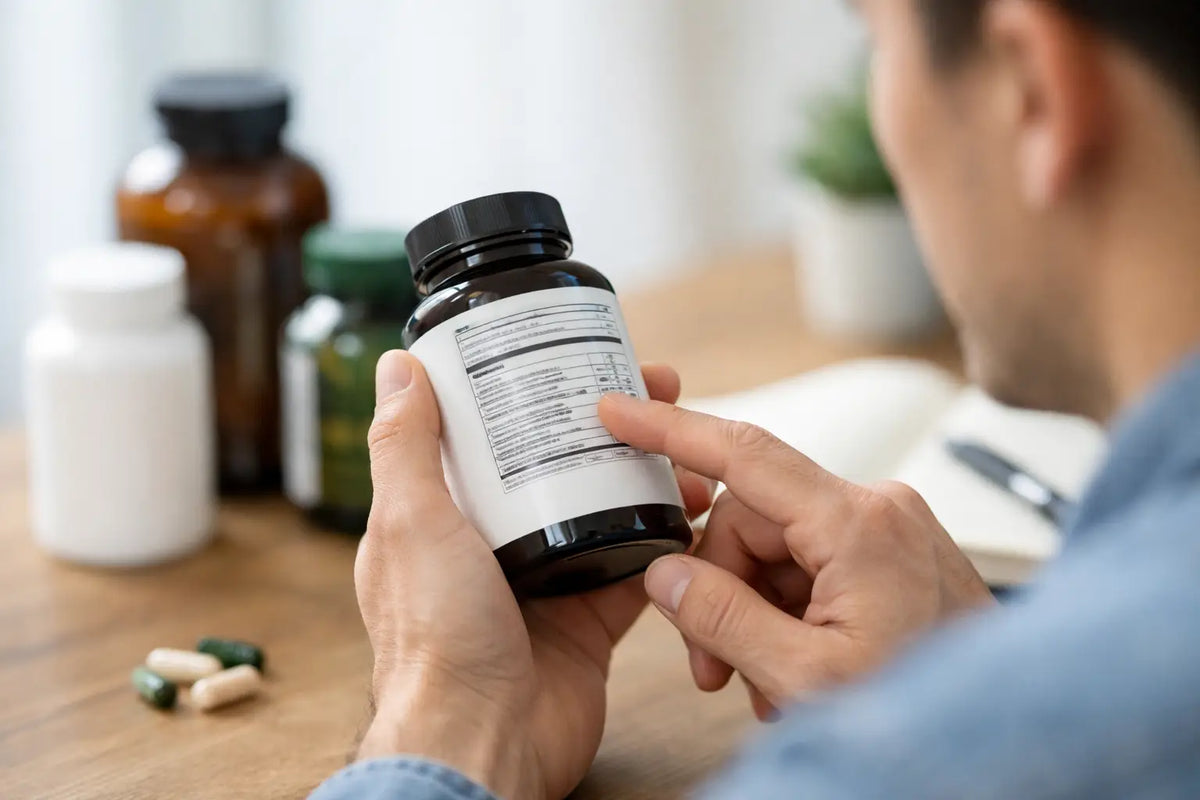
A supplement bottle can look beautifully simple on the shelf, yet the details on its label tell a much bigger story. Learning how to read supplement labels helps you choose products that support your routines with clarity, whether you are building a morning wellness ritual, replenishing after active days, or looking for thoughtful nutritional support as part of a cleaner lifestyle.
A polished front label may highlight phrases like “natural,” “immune support,” or “high potency.” Those words can be helpful starting points, but they do not tell you the full dose, the form of the nutrient, or what else is in the capsule, powder, or gummy. Turn the bottle around. The back label is where an intentional choice begins.
How to Read Supplement Labels, Section by Section
The label has a few core areas, and each answers a different question. Read them together rather than relying on one claim on the front of the package.
Start with the serving size
At the top of the Supplement Facts panel, find the serving size and servings per container. A serving might be one capsule, two gummies, one scoop, or several tablets. Every amount listed below is based on that serving, not necessarily one piece.
This is an easy detail to miss. A bottle may say “1,000 mg” prominently on the front, while the serving size reveals that you need four capsules to receive that amount. That may work well for some routines, but it matters if you prefer fewer capsules or want a product that fits easily into a busy day.
Also notice how long the container will last at the suggested use. A lower-priced bottle is not always the better value if it contains only a two-week supply, while another provides a full month at a comparable daily cost.
Read the active ingredients and amounts
The Supplement Facts panel lists the ingredients intended to provide nutritional or botanical support. Look at the amount per serving, then compare it with your personal goal, your health professional’s guidance, and any other products you take.
Be especially mindful of overlap. A daily multivitamin, greens powder, hydration mix, and targeted supplement can all contribute nutrients such as vitamin D, zinc, magnesium, or B vitamins. More is not automatically better. Some nutrients have established upper intake limits, and higher amounts may be inappropriate for certain health conditions or medications.
When evaluating a formula, context matters. A low dose is not always a weak product, and a very high dose is not automatically a better one. The right amount depends on the nutrient, your diet, lab results when relevant, and the reason you are choosing it. A foundational daily product and a short-term, goal-specific formula may be designed very differently.
Use Percent Daily Value as a reference, not a scorecard
The % Daily Value, or %DV, shows how much a nutrient in one serving contributes to a daily diet. As a general guide, 5% DV or less is considered low, while 20% DV or more is considered high.
That number is useful, but it is not a personalized recommendation. Daily Values are population-based reference points, not a substitute for individual nutrition needs. They also do not appear for every ingredient. Many herbs, mushrooms, amino acids, and specialty compounds do not have an established Daily Value, so a blank %DV does not mean an ingredient has no purpose or no potency.
Check the nutrient form
The form of an ingredient can influence how a supplement fits your needs. Magnesium, for example, may appear as citrate, glycinate, oxide, or other forms. Vitamin B12 may be listed as cyanocobalamin or methylcobalamin. These are not interchangeable in every situation.
There is no universal “best” form for everyone. Some forms are selected for absorption, some for stability, some for a particular function, and some because they are more practical for a certain formula. If you are choosing a supplement for a specific concern, take a moment to understand the ingredient form instead of comparing milligrams alone.
Botanical products deserve the same attention. A label may identify the plant part used, such as root, leaf, fruit, or seed, and may state whether an extract is standardized to a particular compound. That added detail can make it easier to compare products honestly. A whole-herb powder and a concentrated extract can both be valid choices, but they should not be judged as though they are identical.
Look Beyond the Supplement Facts Panel
The active ingredients matter, but so do the ingredients that help make the product stable, flavorful, scoopable, or easy to take. Find the “Other Ingredients” section, usually below or beside Supplement Facts.
For capsules, this may include a plant-based capsule, rice flour, or a flow agent. For powders and gummies, it may include sweeteners, flavors, colors, binders, or texture-supporting ingredients. None of these are automatically a reason to avoid a product. The key is transparency and alignment with your preferences.
If you are committed to reducing unnecessary additives, look for formulas with ingredients you recognize and a clear reason for each one. If you have allergies or sensitivities, review allergen statements carefully. Common allergens, as well as gluten, soy, dairy, or tree-nut processing information, may be listed separately from the ingredient panel.
Dietary preferences can matter too. A label may indicate whether a product is vegan, vegetarian, non-GMO, kosher, or made without certain allergens. Treat these as useful filters, not a complete measure of quality. A product can meet a lifestyle preference and still be worth evaluating for its dose, sourcing, and overall formula.
Be Careful With Blends and Big Promises
A proprietary blend combines multiple ingredients under one total amount. For example, a formula might list a 600 mg “energy blend” containing several herbs, amino acids, and extracts without telling you how much of each ingredient is included.
That does not automatically make the product ineffective. However, it does make it harder to assess whether each ingredient is present in a meaningful amount, compare products, or identify what may be causing an unwanted reaction. If precise dosing matters to you, individual ingredient amounts offer more clarity.
Marketing claims deserve a thoughtful read as well. Language such as “supports calm,” “helps maintain energy,” or “promotes healthy digestion” describes a general structure or function claim. It is not the same as proof that a product will treat, cure, or prevent a disease.
Be cautious with products that promise dramatic results, rapid detoxification, effortless weight loss, or a cure for a wide range of conditions. Wellness support should feel empowering, not pressured. Brands that communicate clearly about what a product contains and what it is intended to support are usually giving you more useful information than those leaning on hype.
Look for Quality Signals Without Assuming Perfection
Quality is not captured by one seal or one buzzword, but a few signals can help you shop with more confidence. Look for a complete Supplement Facts panel, a suggested use, a manufacturer or distributor name and contact information, a lot number, and an expiration or best-by date.
Third-party testing or certification can offer added reassurance, particularly for supplements used by athletes or anyone concerned about ingredient identity and contamination. Depending on the product, testing may examine identity, purity, potency, heavy metals, microbes, or banned substances. Still, it helps to understand what a specific certification covers rather than assuming every seal verifies every aspect of a formula.
Storage instructions matter, too. Heat, moisture, and sunlight can affect certain supplements over time. A product stored in a cool, dry cabinet may stay more stable than one left beside a steamy shower or in a hot car. Once opened, follow any label directions about refrigeration or use-by timing.
Make the Label Work for Your Real Life
The best supplement is not necessarily the one with the longest ingredient list or the most dramatic front-label claim. It is the one that fits a thoughtful, sustainable routine and makes sense for your individual needs.
Before adding a product to your wellness ritual, ask yourself: What am I hoping it supports? What am I already taking? Does the serving size feel realistic? Do I understand the active ingredients and other ingredients? Is the label transparent enough for me to make an informed choice?
If you are pregnant, nursing, managing a health condition, preparing for surgery, or taking prescription medications, speak with a qualified healthcare professional before starting a new supplement. Herbs and concentrated nutrients can interact with medications, and personal guidance is especially valuable when your health needs are more complex.
A clean-living lifestyle is built through small, conscious choices, not perfection. Reading labels gives you a quiet moment to choose with intention - one that can support your body, your routines, and the elevated life you are creating.



Leave a comment
This site is protected by hCaptcha and the hCaptcha Privacy Policy and Terms of Service apply.