
Soy Wax Versus Paraffin Wax: Which Is Cleaner?
A candle can change the feeling of a room in minutes. Light one while you make coffee, settle into a bath, meditate, or welcome people into your home, and fragrance becomes part of the atmosphere you are creating. That is why the choice between soy wax versus paraffin wax matters to many clean-living households. It is not only about which candle smells strongest. It is about ingredients, performance, sourcing, and the kind of everyday ritual you want to bring into your space.
Neither wax tells the whole story by itself. The wick, fragrance, dye, vessel, burn habits, and manufacturing quality all shape a candle’s experience. Still, understanding the differences gives you a clearer path toward a home that feels beautiful, intentional, and aligned with your values.
Soy Wax Versus Paraffin Wax at a Glance
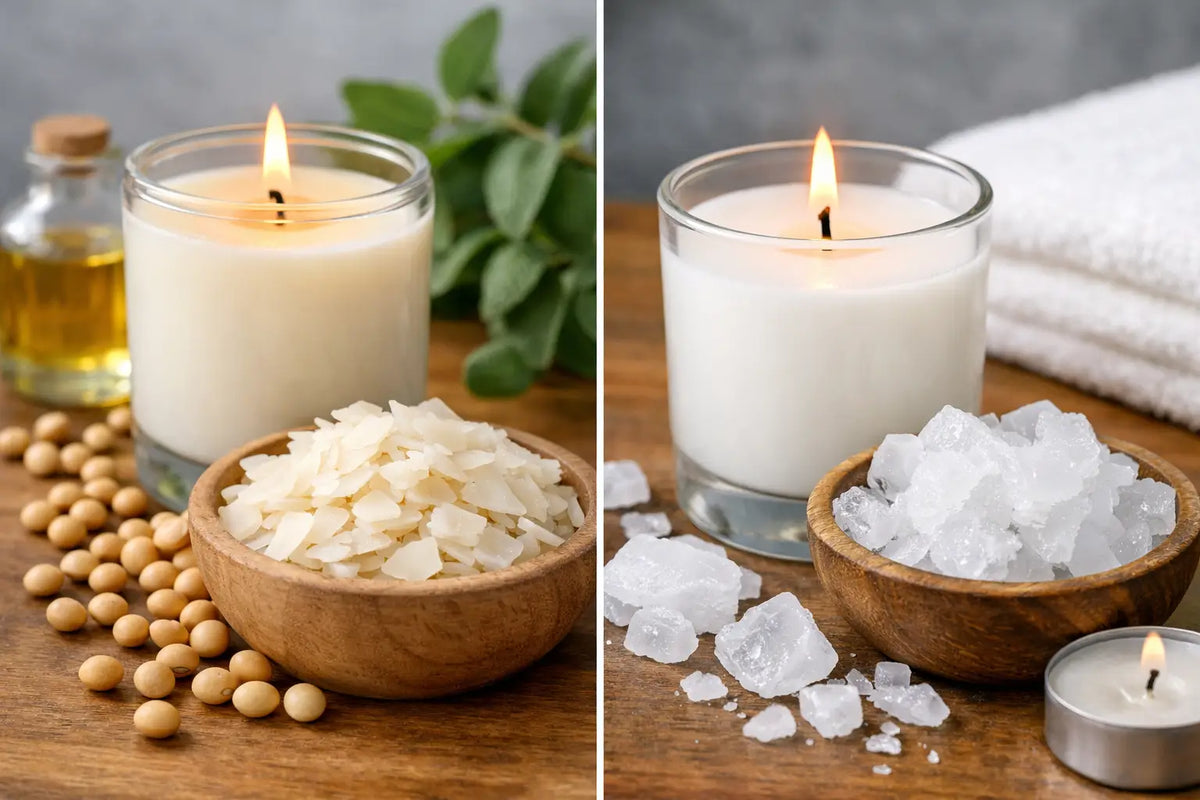
Soy wax is made from soybean oil that has been processed into a solid wax. Because soybeans are a plant-based agricultural resource, soy wax is commonly chosen by people looking for a more renewable alternative to petroleum-derived waxes. Most container candles made with soy are soft, creamy in appearance, and designed to burn at a relatively low temperature.
Paraffin wax is derived from petroleum refining. It has been used in candle making for generations because it is affordable, predictable, easy to color, and excellent at carrying fragrance. Many conventional candles use paraffin, including candles that are highly scented or made in molded shapes.
The simplest distinction is source: soy begins with a crop, while paraffin begins with petroleum. But a thoughtful decision goes further. A candle is a complete system, and its materials should be considered together rather than judged by one label alone.
Why Clean-Living Shoppers Often Choose Soy
For people building a more mindful home, soy wax has several appealing qualities. Its plant-based origin can feel more aligned with a natural lifestyle, especially when paired with thoughtfully selected fragrance oils, cotton or wood wicks, and minimal packaging. Soy wax is also often described as biodegradable and easier to clean from containers with warm, soapy water after the candle is finished.
Many soy candles burn more slowly than paraffin candles of a comparable size, although burn time always depends on the specific wax formula, wick, vessel, and how long the candle is burned at one time. A slower-burning candle can make a favorite fragrance feel like a lasting part of your evening wind-down rather than a quick-use item.
Soy also tends to produce less visible soot when a candle is properly wicked and cared for. That does not mean a soy candle creates no emissions. Any burning candle releases particles and gases into the air, and an oversized wick, a long untrimmed wick, or a draft can cause smoke with any wax type. The goal is not perfection. It is making an informed choice and using candles with care.
A more intentional home fragrance ritual
A soy candle fits naturally into a slower, more intentional routine. Its softer burn and often more subtle fragrance throw can make it especially lovely for bedrooms, reading corners, bathrooms, and moments when you want scent to support the mood without taking over the room.
This is not a rule that soy candles are always lightly scented. A well-crafted soy candle can beautifully fragrance a space. Still, soy generally holds and releases scent differently from paraffin, particularly in large open rooms. If you love a strong, immediate fragrance experience, wax type and fragrance load both deserve consideration.
Where Paraffin Wax Performs Well
Paraffin has remained popular for practical reasons. It creates a strong scent throw, meaning fragrance can travel effectively both when the candle is cold and while it is burning. It is also firm and versatile, making it a useful choice for pillar candles, tapers, detailed decorative shapes, and products that need to hold up in warmer conditions.
For some candle lovers, performance is the deciding factor. A paraffin candle may fill a large living room more quickly, offer brighter color, or deliver the familiar scent intensity they associate with a traditional candle. Paraffin is not automatically a sign that a candle is poorly made, just as soy is not an automatic guarantee of a clean, high-quality formula.
The concern for many wellness-minded shoppers is paraffin’s petroleum-based origin and the desire to reduce petroleum-derived materials at home where alternatives are available. That preference is reasonable, particularly for those who are already choosing cleaner personal care, botanical soaps, and more natural home fragrance. It is also worth avoiding fear-based claims. The real-world experience of a candle depends heavily on how it is made and burned, as well as how often it is used and how well the space is ventilated.
The Details That Matter Beyond Wax
A candle labeled “soy” is not always 100% soy wax. Many candle makers use soy blends, sometimes combining soy with coconut wax, beeswax, or a small amount of paraffin to improve scent throw, appearance, or burn consistency. Blends are not inherently bad, but transparency matters. If a fully plant-based wax is important to you, look for clear ingredient information rather than assuming the front label tells the full story.
Fragrance deserves equal attention. Both soy and paraffin candles can use fragrance oils, essential oils, or a combination of the two. Essential oils can offer a beautiful aromatic profile, but they are not automatically safer in every context, and not every essential oil performs well when heated. Quality fragrance oils made for candle use can also be a thoughtful choice when they are selected with clear standards and used appropriately.
The wick is another quiet but important part of the equation. A properly matched wick helps create an even melt pool, limits excess smoking, and supports a steady flame. Cotton, paper-core cotton, and wood wicks each perform differently depending on the wax and vessel. A high-quality candle maker tests the whole formula, not just the wax.
Colorants, glitter, dried botanicals, crystals, and decorative elements should also be used thoughtfully. A candle may be visually stunning, but loose materials near a flame require care. If a candle includes a crystal or decorative element, remove it from the wax once it becomes accessible and before it gets too close to the wick.
Environmental Trade-Offs Worth Knowing
Soy wax has a renewable origin, but “plant-based” does not mean impact-free. Soybean farming requires land, water, transportation, and processing. Agricultural practices vary widely, and soy is part of a larger global crop system with meaningful environmental considerations.
Paraffin uses a petroleum byproduct, which makes it less appealing to shoppers trying to move away from fossil-fuel-based materials. Yet its efficient production and strong performance explain why it remains common. The more useful question is not which wax is flawless. It is which option better supports your priorities, and whether the maker is open about sourcing and ingredients.
For many households, choosing a thoughtfully made soy candle in a reusable glass vessel is a practical way to reduce reliance on petroleum-derived wax while creating a comforting home ritual. Reusing or recycling the vessel when possible adds another small layer of intention.
How to Burn Any Candle More Cleanly
Good candle care protects both the candle and your experience of it. Trim the wick to about one-quarter inch before each burn, unless the maker gives different instructions. This helps keep the flame controlled and can reduce mushrooming, smoke, and soot.
Allow enough time on the first burn for the wax to melt close to the edge of the container. This can help prevent tunneling, especially with soy wax, which has a lower melt point and may need patience to establish an even melt pool. At the same time, do not burn a candle for excessively long stretches. Follow the brand’s guidance, keep it away from drafts, and stop using it when about one-half inch of wax remains.
Ventilation matters, too. Enjoy candles in a well-aired room, especially in smaller spaces. If you are sensitive to fragrance, start with shorter burn sessions or choose gentler scent profiles. Home fragrance should feel supportive, never overwhelming.
Which Wax Is Right for Your Home?
Choose soy wax if you are drawn to plant-based materials, a softer and slower-burning candle experience, and a home fragrance ritual that fits naturally into a clean-living lifestyle. It can be an especially meaningful choice for everyday moments of rest, reflection, and self-care.
Choose paraffin if your highest priority is bold scent throw, crisp color, or a specific candle format such as a sculptural pillar or taper. There is room for personal preference, especially when you understand what you are bringing into your home and use it responsibly.
For many intentional shoppers, the best answer is a well-made soy or plant-wax candle with transparent ingredients, a properly tested wick, and a fragrance that makes their space feel peaceful and personal. Let each flame be a small reminder that the atmosphere of your home is built through the choices you make every day. Elevate your life one mindful ritual at a time.

Leave a comment
This site is protected by hCaptcha and the hCaptcha Privacy Policy and Terms of Service apply.