
Are Soy Candles Non Toxic? The Honest Answer
A candle can make an ordinary Tuesday night feel like a reset. Light it while you make tea, settle into a bath, journal, or simply bring your home back to a calmer energy. But are soy candles non toxic? The honest answer is: not automatically. Soy wax is often a cleaner starting point than conventional paraffin wax, yet the safety of a candle depends on the full formula, the wick, the fragrance, and how it is burned.
For a more intentional home, it helps to look beyond the word “soy.” A thoughtfully made candle can support a beautiful ritual with fewer unnecessary ingredients. A candle labeled soy that contains unknown fragrance materials, a questionable wick, or a large amount of paraffin blend deserves a closer look.
Are soy candles non toxic by default?
No candle is completely consequence-free once it is lit. Burning anything creates some level of combustion byproducts, including tiny particles. “Non-toxic” is also not a tightly regulated, universal candle standard, so brands can use the phrase differently. That does not mean all candles are harmful or that a clean candle ritual is off the table. It means ingredient transparency matters more than a front-label promise.
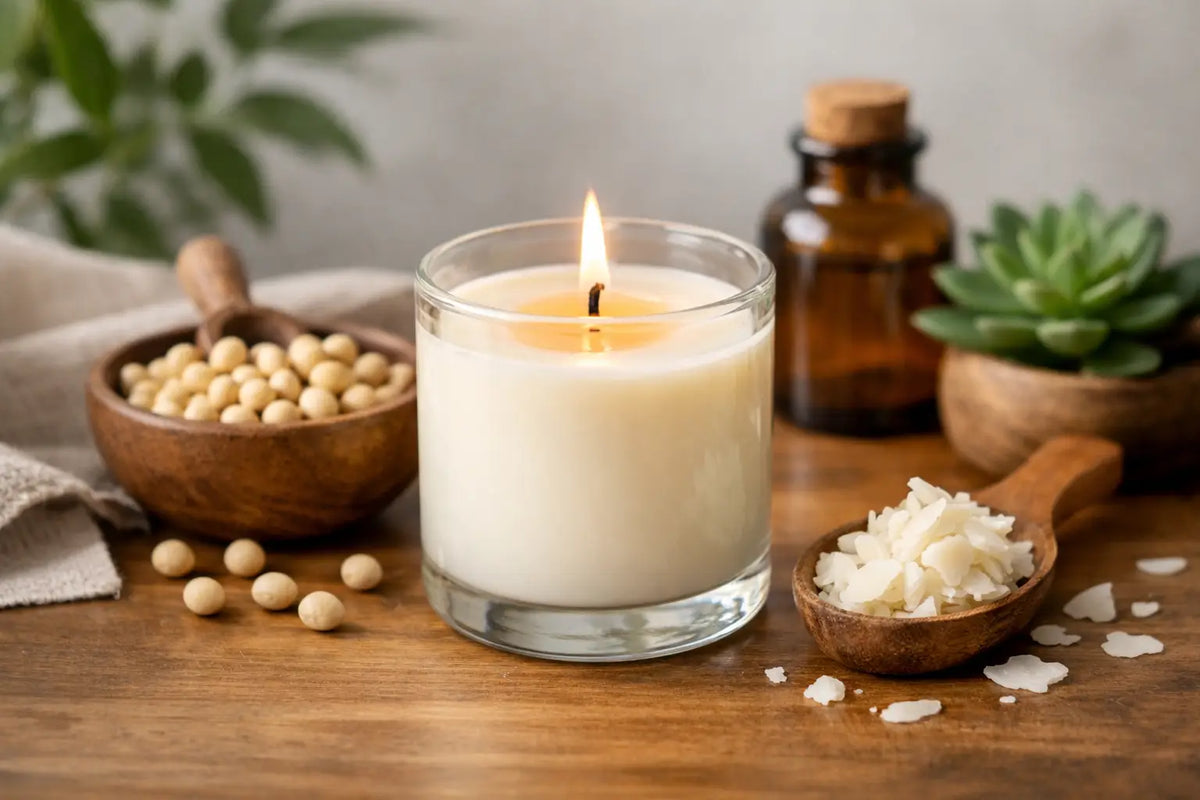
Soy wax is made from soybean oil that has been processed into a solid wax. In many candle formulations, it burns at a lower temperature and can produce less visible soot than paraffin when the candle is well made and properly cared for. Paraffin is petroleum-derived, while soy is plant-based and renewable. For many clean-living households, that makes soy a meaningful upgrade.
Still, soy wax alone cannot tell you everything. A candle may be a soy blend rather than 100% soy. It may contain paraffin or other waxes to improve scent throw, appearance, or burn performance. Its fragrance and wick may be more relevant to your experience than the wax itself.
What makes a soy candle a cleaner choice?
Think of a candle as a complete system, not just wax in a jar. The cleanest choice is one made with transparent ingredients and designed to burn steadily. When comparing options, look for a candle that clearly identifies its wax type, wick material, and fragrance standards.
The wax blend
A 100% soy wax candle is different from a candle marketed simply as “soy,” which may contain a blend of waxes. Blends are not automatically bad. Some makers use coconut wax or beeswax alongside soy to create a smoother burn. The key is clear disclosure. If a brand will not say what is in its wax, you are left guessing.
Soy also has practical trade-offs. It can have a softer texture, may develop a frosted appearance, and can be sensitive to temperature changes. Those details are normal characteristics of a natural wax, not evidence that the candle is poor quality.
The wick
A well-chosen wick helps a candle burn evenly and reduces excess smoke. Cotton wicks and wooden wicks are common options. Look for a brand that states its wicks are lead-free. Lead-core wicks were banned in the United States years ago, but transparency remains a worthwhile standard when selecting anything you burn in your home.
Even a clean wax candle can smoke if its wick is too long, the flame is flickering wildly, or it is placed in a draft. Candle care is part of cleaner burning.
The fragrance formula
Fragrance is where the conversation needs the most nuance. Synthetic fragrance is not one single ingredient, and “natural fragrance” is not automatically risk-free. Both can contain components that irritate sensitive people. Essential oils can be lovely in home rituals, but they are concentrated botanical materials and may trigger headaches, allergies, or asthma symptoms for some individuals.
A conscious candle maker should be able to explain its fragrance approach. Look for clear communication around phthalate-free fragrance oils, ingredient standards, and the avoidance of unnecessary additives. If you are fragrance-sensitive, choose an unscented candle or use a lightly scented option in a well-ventilated room rather than assuming any fragrance is universally gentle.
Dyes, glitter, and extra additives
A candle does not need heavy dyes, glitter, or decorative additions to feel special. Crystals, dried botanicals, and other beautiful elements can make a meaningful gift or ritual piece, but they should be positioned safely away from the flame and used according to the maker’s instructions. The cleaner choice is often the simpler one: quality wax, a properly sized wick, and a considered scent.
Why “clean burning” does not mean zero emissions
Clean-burning is best understood as a relative term. A well-made soy candle with a trimmed wick generally creates a more pleasant, lower-soot experience than a poorly made candle that sends visible smoke into the room. But it does not mean the air remains unchanged while it burns.
Room size, airflow, burn time, and the number of candles lit all affect indoor air. Lighting one candle for an hour in an open living space is different from burning several strongly scented candles all evening in a small closed bedroom. Your body also offers useful feedback. If a scent gives you a headache, causes throat irritation, or feels overwhelming, extinguish it. A wellness ritual should leave you feeling more at ease, not less.
This is especially worth considering for people with asthma, migraines, fragrance sensitivities, or other respiratory concerns. Households with babies and pets may prefer shorter burn times, good ventilation, and products with straightforward ingredient information. When in doubt, choose less fragrance rather than more.
How to burn soy candles more mindfully
The way you use your candle can make a real difference in its performance and your indoor environment. Start by trimming the wick to about one-quarter inch before each burn. A shorter wick creates a steadier flame and helps prevent mushrooming, smoke, and soot.
For the first burn, allow enough time for the melted wax to reach close to the edge of the container. This helps prevent tunneling, where wax remains stuck along the sides and the candle burns unevenly. Avoid burning a candle for more than three to four hours at a time, unless the maker gives different directions, and keep it away from open windows, fans, and air vents.
Ventilation matters, too. You do not need to turn a cozy moment into a complicated project. Cracking a window after your candle ritual or allowing fresh air to circulate can help keep your space feeling balanced. Always extinguish the candle before leaving the room, and stop using it when about one-half inch of wax remains in the bottom of the vessel.
A simple standard for choosing soy candles
When you want your home fragrance to align with your clean-living values, use a practical filter. Choose makers that are open about what goes into their candles and avoid relying on vague claims alone. A strong product description should make it easy to understand the wax, wick, fragrance approach, and basic burn instructions.
Look for these five signs of a more conscious candle:
- A clearly stated soy wax or disclosed plant-wax blend
- Lead-free cotton or wooden wicks
- Transparent fragrance standards, such as phthalate-free formulations
- No unnecessary dyes or unclear filler ingredients
- Complete safety and candle-care guidance
The best soy candle for you is one that earns your trust through clarity, burns beautifully with proper care, and makes your home feel like a place you want to return to. Let the flame be simple: a quiet moment, a cleaner choice, and a ritual that supports the life you are creating.

Leave a comment
This site is protected by hCaptcha and the hCaptcha Privacy Policy and Terms of Service apply.