
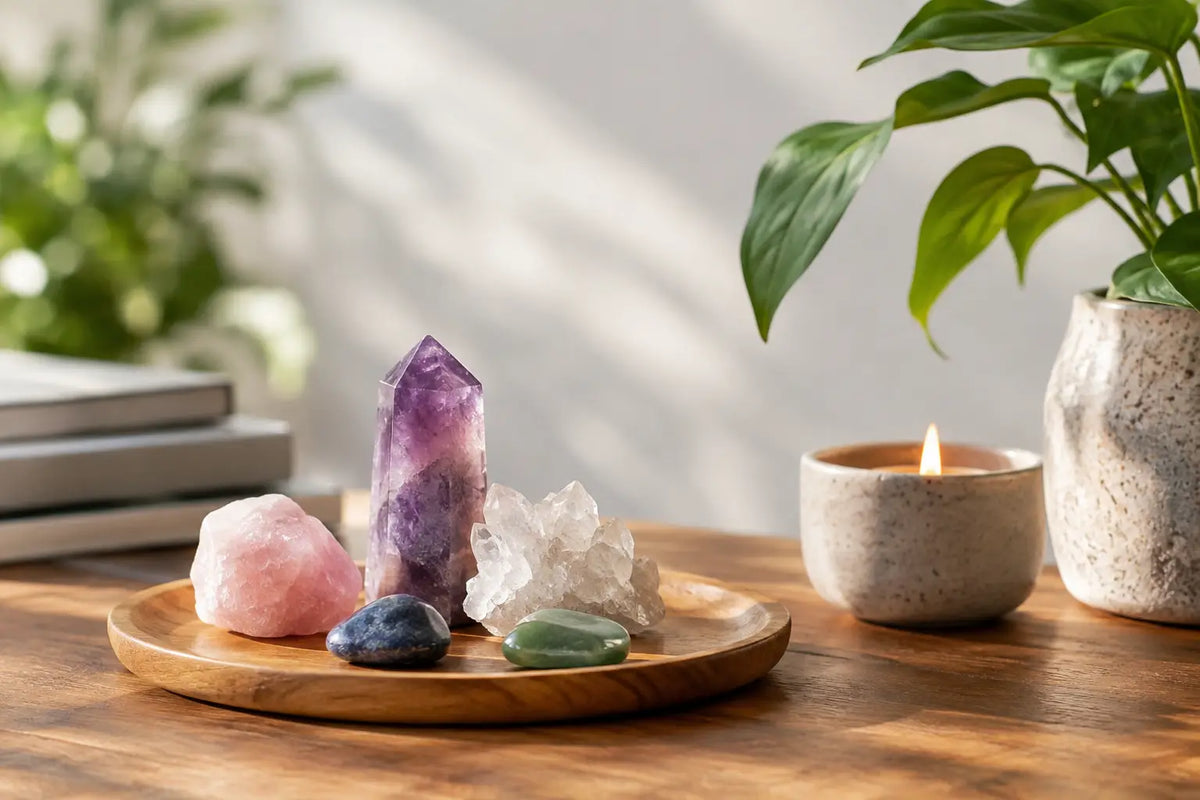
Do Crystals Work? A Grounded Look at Ritual
A smooth rose quartz palm stone in your pocket may not change a difficult conversation. A grounding black tourmaline by the front door cannot replace rest, boundaries, or professional care. Yet many people still reach for crystals at meaningful moments - before a presentation, during meditation, after a hard day, or when they want their home to feel more like a refuge. So, do crystals work? The most honest answer is that it depends on what you mean by “work.”
If you are asking whether a crystal has been scientifically proven to heal illness, remove anxiety, attract money, or change external events through invisible energy, the evidence is not there. If you are asking whether a beautiful natural stone can help you pause, set an intention, create a comforting ritual, and make a space feel more personal, the answer can absolutely be yes.
That distinction leaves room for both curiosity and clear thinking. Crystals do not need to carry impossible promises to hold a meaningful place in an intentional, elevated lifestyle.
Do crystals work according to science?
Crystals are real minerals with distinct chemical compositions and physical structures. Quartz, for example, has practical uses in technology because it can produce an electrical charge under pressure. But that material property does not demonstrate that a quartz point can direct emotional healing, protect someone from negativity, or influence outcomes in the way crystal lore sometimes suggests.
Research has not established that crystals possess special therapeutic powers beyond expectation, context, and personal belief. In one often-cited experiment, participants reported similar sensations whether they held real crystals or convincing imitation stones. People who expected to feel warmth, tingling, calm, or focus were more likely to notice those experiences.
That is not a reason to ridicule the experience. The mind and body are connected. Expectations can affect how we perceive discomfort, stress, and safety. A ritual that signals “it is time to slow down” may help settle a busy nervous system, especially when it is paired with practical supports such as sleep, nourishing meals, movement, therapy, medical care, or a conversation with someone you trust.
The key is to keep claims in proportion. Crystals can be a personal wellness tool, but they are not a diagnosis, treatment, cure, or substitute for qualified medical or mental health support.
Why crystals can still feel meaningful
The value of a crystal is often less about a hidden force and more about what it helps you practice. Humans use objects to mark transitions and reinforce intentions all the time: a wedding ring, a journal, a favorite mug, a photograph on a desk. A crystal can serve a similar purpose, with the added appeal of natural color, texture, history, and beauty.
Holding a stone can become a physical cue. Each time you touch it, you might take one slower breath, return to a chosen phrase, or check in with how you feel. That small interruption can be useful in a rushed day. A bracelet may remind you to speak with patience. A bedside amethyst may become part of an evening wind-down routine. A clear quartz tower on a workspace may represent focus before you begin a task.
These outcomes are not proof that the stone is controlling your life. They are evidence that habits, symbols, and attention matter. A meaningful object can make an intention easier to remember because it gives that intention a visible place in your environment.
There is also simple sensory comfort. Stones are cool, weighty, and visually absorbing. Looking at the bands in agate or the deep blue of sodalite can invite a moment of quiet appreciation. In a home designed for cleaner living and calmer routines, those details can help create an atmosphere that feels considered rather than cluttered.
Choose crystals as tools, not promises
Crystal traditions are rich, varied, and deeply personal. You may see rose quartz associated with love, citrine with confidence, or smoky quartz with grounding. There is nothing wrong with choosing a stone based on that symbolism, as long as you approach it as inspiration instead of a guarantee.
Try replacing outcome-based expectations with a personal practice. Instead of asking a crystal to make you fearless, choose one to remind you that courage can coexist with nerves. Instead of expecting a stone to erase stress, use it as a cue to step outside, stretch, drink water, or take five intentional breaths.
That shift is empowering because it keeps the agency with you. The crystal becomes part of your ritual, not a replacement for your own choices or care.
Create an intention you can act on
The most helpful intentions are specific enough to guide a real action. “I want peace” is a beautiful wish, but “I will leave my phone outside the bedroom and read for ten minutes” gives peace a practical path.
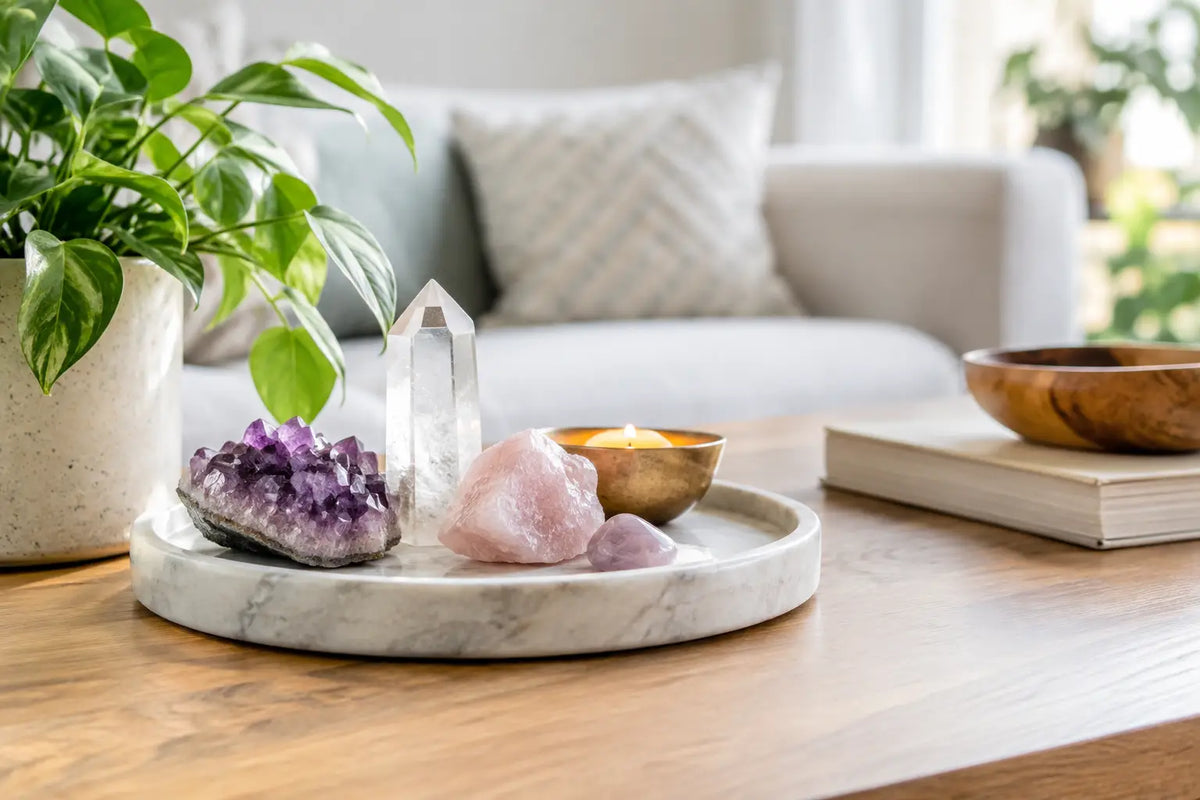
You might place a calming stone near a journal and use it as a reminder to write down one thought before bed. Keep a pocket stone near your keys as a cue to pause before driving home. Place a crystal beside a clean-burning candle during a weekly reset, then use that time to tidy one small area, refresh the room, and consider what you need in the week ahead.
The ritual does not have to be elaborate. In fact, the rituals that last are usually the ones that fit naturally into real life.
A mindful way to bring crystals into your home
Start with what genuinely draws you in. Color, shape, texture, origin, and craftsmanship all matter. You do not need a large collection to create a meaningful space. One carefully chosen sphere on a bookshelf or a small cluster on a nightstand can feel more intentional than buying stones because someone said you “should” have them.
Consider the role each piece will play. A substantial tower may suit a desk or meditation corner, while a small tumbled stone is easier to carry. Crystal jewelry can keep a personal reminder close without requiring a dedicated display. For a thoughtful gift, choose a stone that reflects the recipient’s style and pair it with a simple note about the intention you hope it supports.
Care also matters. Wipe stones gently with a soft cloth and learn about their specific needs before exposing them to water, salt, or direct sunlight. Some minerals can fade, scratch, dissolve, or become damaged with common cleansing methods. If you enjoy spiritual cleansing, gentle options such as setting an intention, using sound, or placing a piece in a clean, peaceful space can be meaningful without risking the stone.
When possible, ask about sourcing. Natural minerals come from the earth, and mindful shoppers can look for sellers who value transparency, accurate identification, and respectful handling. Ethical choices are part of intentional living, not an afterthought.
Let the ritual support real well-being
A crystal ritual works best when it supports the life you are already building: a calmer home, healthier daily choices, and more space to reconnect with yourself. Let it complement practical care rather than compete with it.
If you are navigating persistent sadness, panic, trauma, pain, or a health concern, reach out to a licensed professional. You can still bring a comforting stone to an appointment or hold one during a breathing exercise. The point is not to choose between modern care and meaningful ritual. It is to honor both discernment and the human need for beauty, hope, and moments of pause.
Crystals may not hold the power to fix what is hard. But they can hold a place in your hand while you take the next grounded step - and that can be a beautiful place to begin.

Leave a comment
This site is protected by hCaptcha and the hCaptcha Privacy Policy and Terms of Service apply.