
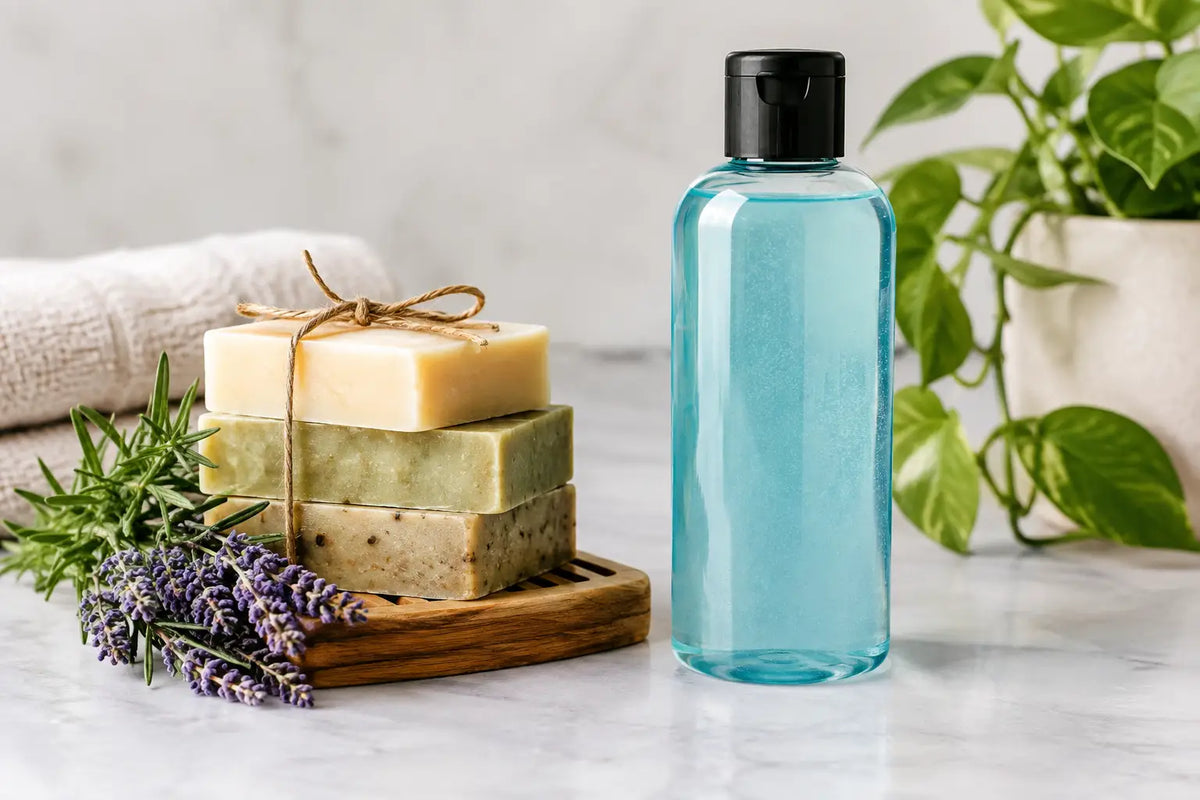
Natural Soap Versus Body Wash for Your Routine
The cleanser sitting beside your sink or in your shower may seem like a small decision, but it touches your skin every single day. When considering natural soap versus body wash, the best choice is rarely about following a trend. It is about finding a formula, format, and daily ritual that feels good on your skin and aligns with the cleaner lifestyle you are creating.
A beautiful botanical bar can turn a rushed shower into a grounding moment. A thoughtfully made liquid cleanser can offer familiar ease for busy mornings, kids’ bath time, or a shared household. Both can have a place in an intentional home. The key is learning what is actually inside, how your skin responds, and what matters most to you.
Natural Soap Versus Body Wash: The Real Difference
Traditional soap is made through saponification, a process that combines oils or fats with an alkali. The finished bar cleanses because its soap molecules help lift oils and debris from the skin so they can rinse away. Natural soap bars often feature plant oils such as olive, coconut, sunflower, or shea butter, along with botanical colorants, clays, herbs, and naturally derived aromas.
Body wash is a liquid cleanser, usually made with water, cleansing agents called surfactants, and ingredients that create its texture, scent, and shelf stability. A body wash is not automatically less natural than a bar, just as a soap bar is not automatically gentler. Formulation matters far more than the shape of the product.
One useful distinction: true soap generally has a naturally higher pH than skin, while many body washes are formulated closer to skin’s mildly acidic surface. That can make a well-formulated body wash a comfortable option for some people with very dry or reactive skin. At the same time, a nourishing bar made with quality oils may feel wonderful for someone else. Skin is personal, and a label cannot predict every experience.
What “Natural” Should Mean to You
The word “natural” is widely used in personal care, but it does not carry one universal definition. Instead of relying on the word alone, read the ingredient list and consider the full approach behind the product.
Look for clear, recognizable ingredients and a brand that explains its choices with care. In a botanical soap, you might see oils, butters, oat, clay, sea salt, or plant-based essential oils. In a clean body wash, you may see water, gentle plant-derived surfactants, glycerin, aloe, and botanical extracts. Ingredient names can sound technical even when they are safe or plant-derived, so unfamiliar words are not automatically a reason to avoid a formula.
It is equally wise to be thoughtful about fragrance. Essential oils are natural, but natural does not always mean non-irritating, especially for sensitive skin. If you experience redness, itching, eczema flares, or frequent dryness, an unscented option may be the most peaceful choice. A patch test on a small area of skin is a simple act of self-care when trying something new.
Clean living is not about chasing perfection or fearing every conventional ingredient. It is about making informed choices, reducing what does not serve you, and choosing products that support your well-being with greater intention.
When a Natural Soap Bar May Be the Better Fit
A natural soap bar is a lovely choice for people who want a simple, sensory, lower-waste cleansing ritual. It is compact, easy to travel with, and often requires less packaging than a bottled product. A bar can also last a long time when stored properly on a draining soap dish rather than left in standing water.
Many people enjoy the tactile experience of a handcrafted bar: the creamy lather, a subtle botanical scent, and the visual beauty of herbs or mineral-rich clay. It can make an ordinary daily habit feel more considered. A bar of soap beside a soft towel, a calming candle, and a few quiet minutes can create a small reset before the day begins or ends.
Still, bars are not identical. Some formulas made with a high percentage of cleansing oils, such as coconut oil, can feel more drying for certain skin types. Others are formulated with extra nourishing oils left unsaponified, often called superfatting, to create a gentler feel. If your skin feels tight shortly after bathing, that is useful feedback. Try a creamier bar, shorten your shower, and apply body moisturizer while skin is still slightly damp.
When Body Wash Makes More Sense
Body wash can be especially practical for households that prefer a pump bottle, people who use a shower pouf or washcloth, and anyone who likes a cleanser that spreads quickly over the body. Liquid formulas can also make it easier to include skin-supportive ingredients such as glycerin, aloe, and humectants that help attract moisture.
For very dry, mature, or sensitive skin, a fragrance-free body wash with mild surfactants may be the more comfortable everyday option. It can cleanse without leaving the same squeaky-clean feeling some people associate with traditional soap. That feeling may seem satisfying, but it can also signal that your skin’s natural oils have been removed more thoroughly than you need.
The trade-off is that body wash typically comes in a bottle and needs preservation because it contains water. Preservatives are not inherently harmful. In fact, an effective preservation system helps prevent microbial growth in a water-based product. The mindful question is whether the formula is transparent, responsibly made, and suited to your personal preferences.
Consider Your Skin, Your Space, and Your Habits
Rather than declaring one format better for everyone, build your choice around the rhythm of your real life. A few questions can bring clarity:
- Does your skin feel comfortable after cleansing, or dry and tight?
- Do you prefer a minimal, low-packaging routine or the convenience of a pump?
- Are you sensitive to fragrance, essential oils, or rich botanical blends?
- Will the product be stored in a humid shared shower, at a guest sink, or packed for travel?
- Do you want cleansing to be fast and functional, or part of a more intentional self-care ritual?
Better Cleansing Is Also About Technique
Even a thoughtfully formulated cleanser can feel drying when used too often or paired with very hot water. Long, steaming showers may be relaxing, but they can strip moisture from the skin. Keep water warm rather than hot, use only as much cleanser as you need, and focus on areas that truly require it, such as underarms, feet, and skin folds.
After bathing, gently pat your skin dry instead of rubbing it. Follow with a body oil, lotion, or butter while your skin is still lightly damp to help hold in moisture. These small habits often make a bigger difference than switching formats alone.
If persistent irritation, cracking, hives, or rash occurs, pause the new product and speak with a dermatologist or qualified healthcare professional. A clean routine should feel supportive, not like a problem you have to push through.
Make Your Daily Ritual More Intentional
Your shower routine can be one of the easiest places to practice mindful living because it happens every day. Choose a natural soap or body wash based on how it supports your skin, your values, and the atmosphere you want to create at home. Pair it with a scent that helps you feel calm and centered, or keep it beautifully simple with an unscented formula.
At HarleyRae, elevating your life begins with choices that are both practical and meaningful. Let your cleanser be one small reminder that caring for your body does not need to be complicated. It can be a quiet, nourishing ritual that helps you step into the rest of your day feeling refreshed, comfortable, and more connected to yourself.

Leave a comment
This site is protected by hCaptcha and the hCaptcha Privacy Policy and Terms of Service apply.