
How to Use a Crystal Pendulum With Intention
A crystal pendulum can turn a quiet moment into a meaningful check-in. Learning how to use a crystal pendulum is less about finding perfect answers outside yourself and more about creating space to hear your own intuition, notice what you feel, and move forward with intention.
At its simplest, a pendulum is a weighted crystal suspended from a chain or cord. Many people use it as part of meditation, journaling, intention-setting, or a peaceful home ritual. Its movement may feel symbolic, energetic, or simply useful as a way to slow down and bring subconscious preferences into focus. However you approach it, the most grounding practice is to stay curious, calm, and honest with yourself.
What a crystal pendulum is used for
A pendulum is often used for simple yes-or-no questions, energetic check-ins, and personal reflection. You might use one before setting an intention for the day, choosing a journal prompt, or considering which area of your life needs more care. Some people also use pendulums with crystals, oracle cards, or chakra-focused meditation.
It helps to keep expectations realistic. A pendulum is not a replacement for professional medical, financial, legal, or mental health advice. It also should not make major decisions for you. Think of it as a mindful tool that can reveal your initial response to a question, much like free-writing or pausing to notice how your body reacts when you say something out loud.
The crystal itself can add personal meaning to the ritual. Clear quartz is often chosen for clarity and intention. Amethyst can complement a calming, reflective practice, while rose quartz may feel fitting for questions around self-compassion and relationships. Choose the stone that you are naturally drawn to. Your connection to the piece matters more than following a rigid rule.
How to use a crystal pendulum step by step
Start somewhere that feels settled. You do not need a perfectly styled meditation room, but a quiet corner, a comfortable chair, and a few uninterrupted minutes can make a noticeable difference. Put your phone away, take a slow breath, and let your shoulders drop.
Cleanse the space and set your intention
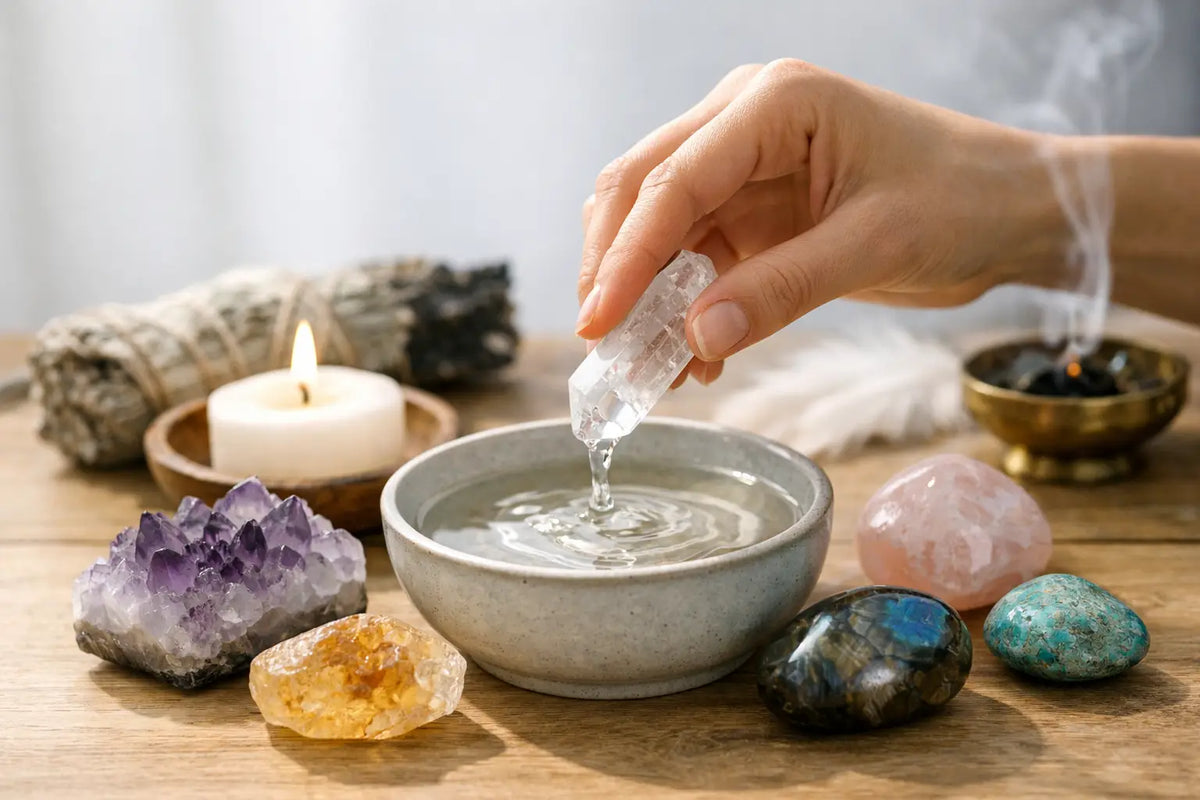
Before beginning, many people like to refresh their pendulum and surrounding space. You might place the crystal near a clean-burning candle, use a favorite essential-oil diffuser, play soft music, or simply hold the pendulum while taking several deep breaths. If you use smoke cleansing tools such as Palo Santo, sage, or incense, follow safe ventilation and fire practices.
Then set a simple intention. It can be as direct as: “I welcome clarity, calm, and honesty.” This step is not about forcing a certain answer. It is about showing up with an open mind rather than carrying the stress of the day into your practice.
Hold the pendulum comfortably
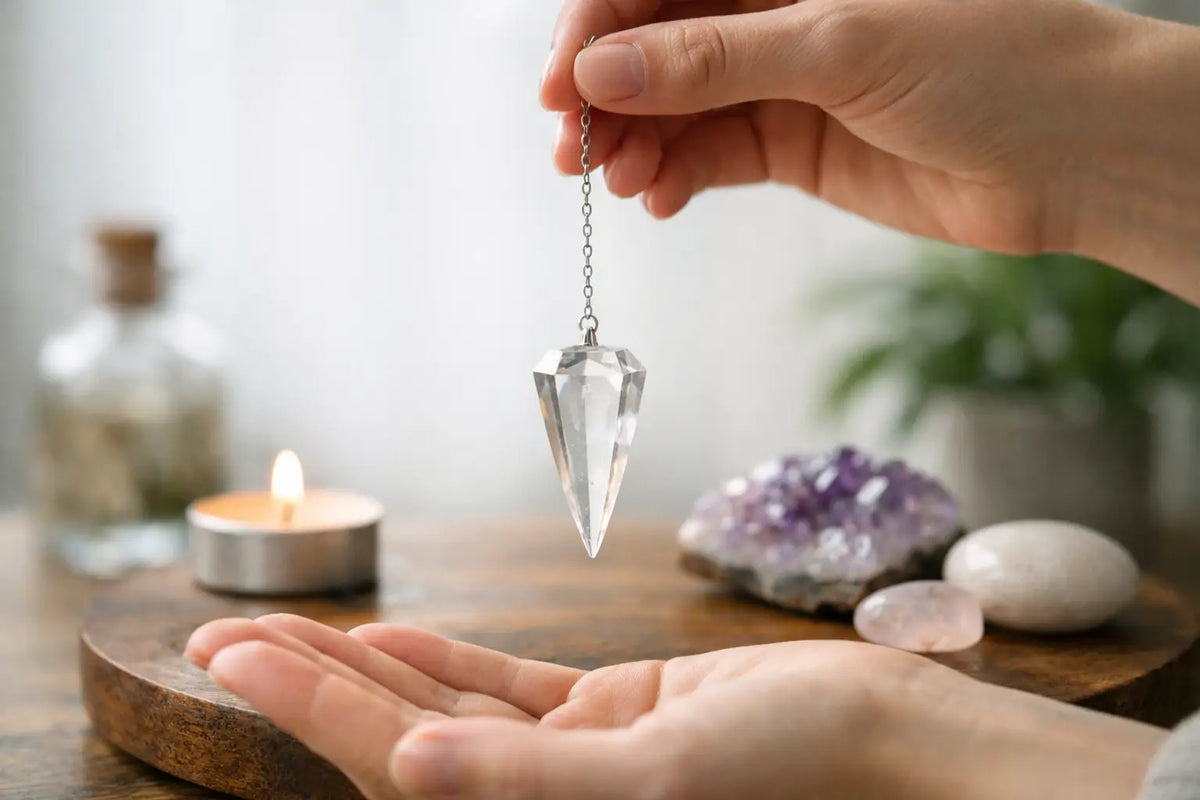
Hold the chain between your thumb and forefinger of your dominant hand, leaving enough length for the crystal to move freely. Three to five inches is a comfortable starting point for most people. Rest your elbow on a table if that helps you keep your hand steady.
Try not to grip the chain too tightly. The pendulum should hang naturally over a flat surface, your open palm, or a pendulum board if you enjoy using one. Keep your feet grounded and breathe normally. Small hand movements are natural, so there is no need to chase complete stillness.
Establish your yes, no, and unclear signals
Every pendulum can move a little differently, which is why it is helpful to establish what its signals mean before asking personal questions. Begin by saying, either quietly or aloud, “Show me yes.” Watch the movement without trying to control it. It may swing forward and back, side to side, in a circle, or diagonally.
Let it return to rest, then ask, “Show me no.” Finally, ask for an “unclear” or “not ready” signal. This third response is valuable. It gives you permission to pause when a question is too emotional, too vague, or simply not useful right now.
Do this calibration each time you practice, especially if you feel distracted. Your signals may be consistent over time, but checking in keeps the ritual intentional rather than automatic.
Ask clear, gentle questions
The quality of your question shapes the quality of your reflection. Ask one question at a time and keep it specific enough to answer with yes, no, or unclear. For example, instead of asking, “What should I do with my life?” try, “Would taking a quiet evening to journal help me feel more clear about this next step?”
Avoid asking the same question again and again in hopes of receiving a different answer. If you notice yourself doing that, it may be a sign that you already know what you want or that the decision needs more information. Set the pendulum down, make a cup of tea, and return to the question later with fresh perspective.
Questions to ask your pendulum
Pendulum work tends to feel most supportive when the questions center on awareness, self-care, and small next steps. You could ask whether you need rest, whether a particular routine feels supportive, or whether it would help to create more space before responding to a situation.
For a morning ritual, consider questions such as, “Would a walk outside support me today?” or “Is my priority right now to simplify?” In the evening, you might ask, “Am I carrying stress that I can release?” or “Would a few minutes of journaling help me process today?”
For decisions involving another person, respect their privacy and autonomy. Rather than asking the pendulum to reveal someone else’s thoughts or future, bring the focus back to yourself: “Do I need a clearer conversation?” or “Would it feel aligned to give this situation more time?” This keeps the practice compassionate and grounded.
Read the movement without overthinking it
After you ask a question, give the pendulum a moment. Watch for the direction you established during calibration, but also notice your immediate internal response. Did you feel relief, resistance, warmth, tension, or uncertainty before the pendulum moved? That response can be just as revealing as the motion itself.
A pendulum’s movement can be influenced by subtle, unconscious muscle movements, often called the ideomotor response. That does not make the practice meaningless. For many people, it is precisely why pendulum work can be a useful reflection tool: it can make a quiet inner reaction easier to notice.
If the swing is faint or inconsistent, do not assume you have done something wrong. You may be tired, emotionally invested in the outcome, or asking a question that is too broad. Take a break, drink water, and return when you feel more centered. Sometimes “unclear” is the most honest response available.
Create a ritual that fits your real life
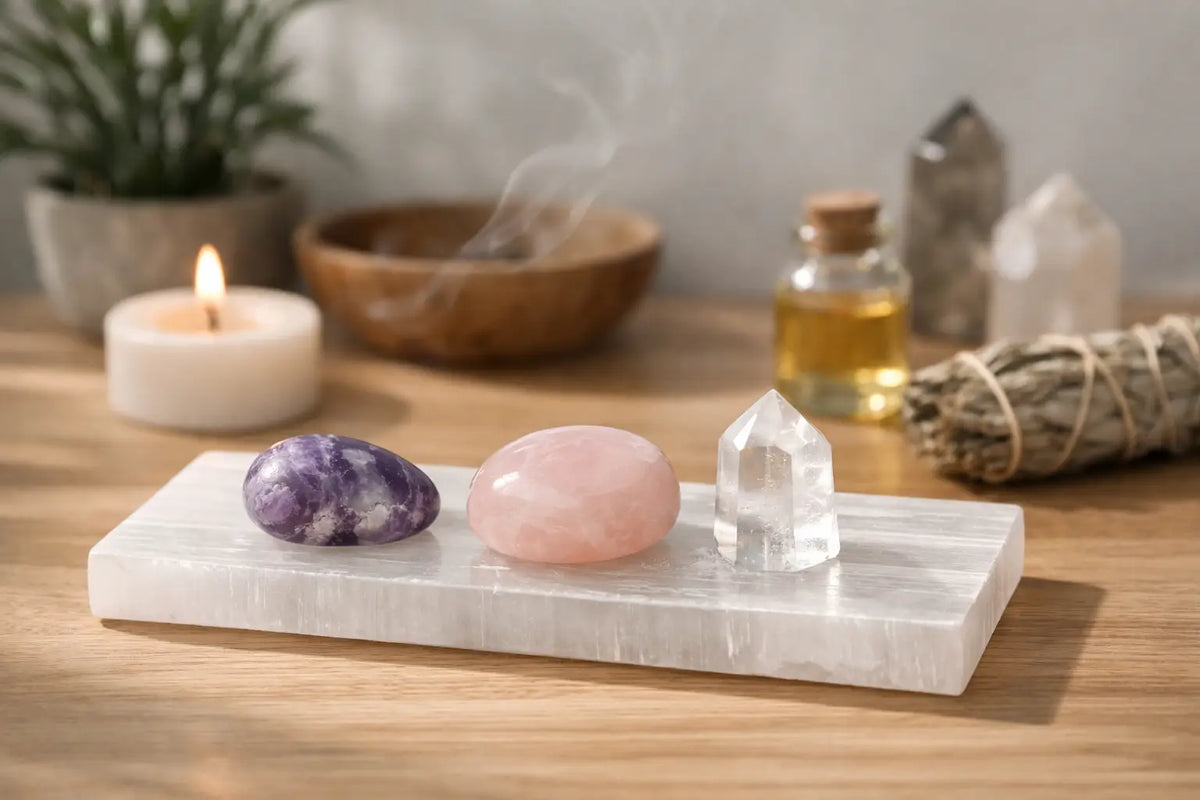
A crystal pendulum practice does not need to be elaborate to feel meaningful. Keep your pendulum in a clean, dedicated place, perhaps beside a journal, a small dish of crystals, or a calming candle. Treat it with the same care you would give any object that supports your wellbeing.
You might use it once a week during a longer self-care ritual, or for two minutes before beginning your day. Pairing the practice with other clean-living habits can make it easier to sustain: light a naturally scented candle, diffuse a grounding aroma, sip a warm wellness beverage, then take a few quiet breaths with your pendulum.
Consistency is helpful, but flexibility matters too. If the ritual starts to feel pressured or overly dependent, step back. Mindful tools are meant to support your agency, not replace it. Your lived experience, practical knowledge, values, and trusted support system remain essential guides.
Caring for your crystal pendulum
Handle your pendulum gently and store it where the chain will not tangle or the crystal will not chip. A soft pouch or lined box works well. Clean it according to the needs of the specific stone, since some crystals should not be soaked in water or exposed to prolonged sunlight.
A simple physical wipe with a soft, dry cloth is often enough for regular care. For an energetic refresh, you may prefer breathwork, sound, moonlight, or placing the pendulum beside other meaningful objects in your space. Choose practices that feel peaceful and practical for you.
The most beautiful pendulum ritual is not the one with the most rules. It is the one that helps you pause, return to yourself, and make the next small choice with greater care. Let your crystal be a reminder that an elevated life is built in those quiet, intentional moments.

Leave a comment
This site is protected by hCaptcha and the hCaptcha Privacy Policy and Terms of Service apply.