
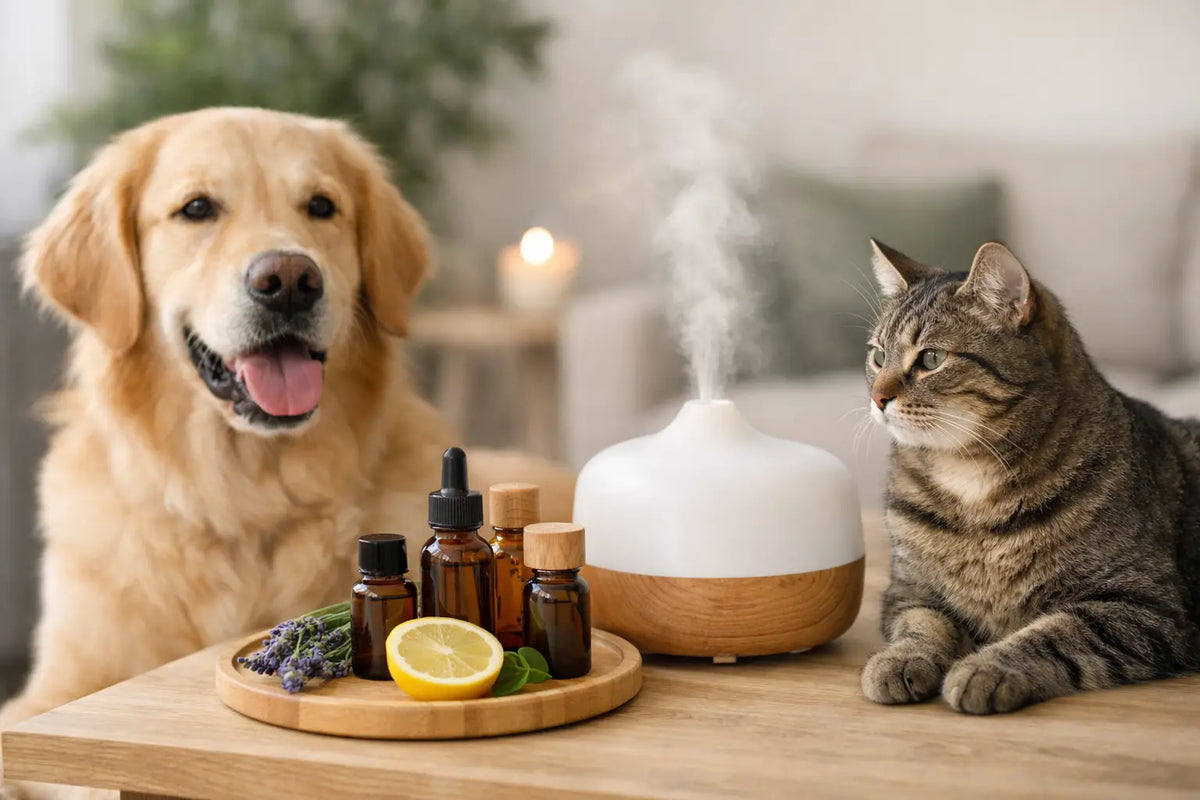
Can Essential Oils Affect Pets? A Safer Home
A few drops in a diffuser can make a room feel calmer, fresher, and more like your own. But can essential oils affect pets? Yes. Because dogs, cats, birds, and small animals process scents and chemical compounds differently than people do, a wellness ritual that feels gentle to us may be irritating or unsafe for an animal sharing the space.
A pet-aware home does not have to mean giving up every comforting ritual. It means choosing with more intention: understanding the form of fragrance you use, respecting your pet’s sensitivity, and giving them a real choice to move away from a scented area. Clean living is most meaningful when every member of the household can breathe easier.
Can Essential Oils Affect Pets in Different Ways?
Essential oils are highly concentrated plant extracts. Their natural origin does not automatically make them harmless to pets. Exposure can happen through breathing in diffused oil particles, licking a spill, walking through residue and grooming it off their paws, or getting oil directly on the skin or coat.
Cats deserve particular caution. Their bodies have limited ability to process certain compounds found in many essential oils, which can make repeated or concentrated exposure more concerning. Dogs may also react, especially if they are very young, older, have respiratory conditions, are prone to seizures, or have liver disease. Birds are exceptionally sensitive to airborne substances because of their delicate respiratory systems. For birds, avoiding diffused oils, smoke, and strongly scented products around their living area is the more protective choice.
The details matter. A brief whiff from across a well-ventilated room is not the same as running a diffuser beside a pet bed for hours. The oil itself, concentration, amount used, room size, ventilation, frequency, species, age, and health history all shape the risk.
Essential Oils That Call for Extra Care
There is no single universal list that covers every animal and every use, but certain oils are regularly associated with greater concern in pet households. Tea tree, eucalyptus, peppermint, citrus oils, pine, wintergreen, cinnamon, clove, and ylang ylang are among the oils worth treating with heightened caution.
That does not mean another oil is automatically safe. Blends can contain several oils, and labels do not always make concentration or full ingredients easy to understand. An oil that seems mild in a skincare recipe may still be too concentrated for direct pet contact or continuous diffusion.
Avoid applying undiluted essential oils to a pet’s fur, skin, collar, bedding, toys, or food. Do not use a diffuser to address behavior, fleas, odors, or health concerns without guidance from a veterinarian who understands your specific animal. Pets cannot opt into an aromatic ritual, and they should never be expected to tolerate one.
How to Use Aromatherapy More Mindfully Around Pets
If you choose to diffuse essential oils in a home with healthy dogs or cats, create distance and flexibility. Use a small amount for a short period in a large, ventilated space, and make sure your pet can leave the room freely. A closed room, a tiny apartment space, or a diffuser positioned near a crate, aquarium, bed, or food bowl is not a thoughtful setup.
Watch your pet rather than relying only on the product label. A dog that repeatedly leaves the room, a cat that hides, or a bird that becomes unsettled is communicating something useful. Turn the diffuser off, open windows when possible, and give the space time to clear.
Store all bottles securely. Essential oils are potent enough that even a small spill or chewed bottle can become an urgent problem. Wipe spills thoroughly, keep oily hands away from your pet until washed, and wash diffuser reservoirs according to their instructions so residue does not build up.
For many homes, the simplest solution is to reserve aromatherapy for a pet-free room or moments when pets are outdoors or elsewhere in the home. You can still create a peaceful atmosphere with fresh air, natural light, soft music, comfortable textiles, and a consistent reset routine. Scent can be beautiful, but it is only one part of a calming home.
Diffusers, Candles, and Wax Melts Are Not the Same
Home fragrance comes in many forms, and each calls for its own consideration. An ultrasonic diffuser disperses tiny particles of water and oil into the air. A reed diffuser can leave concentrated liquid within easy reach of curious pets. Candles and wax melts do not necessarily contain essential oils at all - some use fragrance oils - and burning products can add scent and combustion byproducts to indoor air.
A clean ingredient list is a meaningful part of intentional shopping, but “natural,” “non-toxic,” or “pet-friendly” should not be interpreted as a guarantee of safety for every pet. Product quality matters, yet placement, ventilation, and supervision matter just as much.
When enjoying a candle, keep it out of reach, never leave it burning unattended, and avoid placing it where a pet sleeps or cannot move away from the fragrance. Choose a well-ventilated room and keep burn sessions modest. If your pet has asthma, chronic respiratory symptoms, or shows sensitivity to scents, a fragrance-free environment may be the kindest option.
At HarleyRae, creating a home with intention means making room for both your personal rituals and the well-being of the animals who make that home feel alive. A beautiful ambiance should always feel calm, never confining.
Signs Your Pet May Be Reacting
A reaction may be immediate, but it can also become noticeable after ongoing exposure. Signs can range from mild irritation to a situation that needs urgent veterinary care. Pay attention to coughing, wheezing, excessive drooling, vomiting, diarrhea, watery eyes, unusual tiredness, wobbliness, tremors, skin redness, pawing at the face, or changes in behavior such as hiding or agitation.
Birds may show respiratory distress quickly, including open-mouth breathing, tail bobbing, weakness, or changes in vocalization. Because birds can decline rapidly, any concern after exposure deserves prompt professional attention.
If you suspect an essential oil exposure, move your pet into fresh air and remove the source. If oil touched the fur or skin, prevent grooming and contact your veterinarian for instructions. Do not induce vomiting or give home remedies unless a veterinary professional tells you to do so. Keep the bottle or product packaging available, since ingredient information can help a veterinarian assess the situation.
For concerning symptoms, a known ingestion, direct application, or exposure involving a bird, contact your veterinarian or an emergency veterinary clinic right away. In the United States, animal poison-control services can also provide time-sensitive guidance.
Building a Home That Feels Good for Everyone
The goal is not perfection or fear around every product. It is awareness. Some pets live comfortably alongside carefully managed, occasional home fragrance. Others are more sensitive, and their needs may call for a scent-free routine. Let your individual pet set the standard.
A thoughtful home ritual might mean enjoying a softly scented candle after the dog has settled in another room, saving a diffuser session for a pet-free office, or choosing unscented moments when your cat is nearby. These small adjustments honor the same clean-living principle behind every mindful purchase: what we bring into our spaces should support the life happening inside them.
Your pet’s comfort is part of your home’s energy. When you make room for fresh air, gentler choices, and their quiet cues, you create a space that feels elevated in the way that matters most - safe, peaceful, and shared with care.



Leave a comment
This site is protected by hCaptcha and the hCaptcha Privacy Policy and Terms of Service apply.